Journey
A car-sharing insurance app that flipped a 100-year-old industry default. Cover the driver, not the car — so lending your car to a friend doesn't quietly raise your own premium.
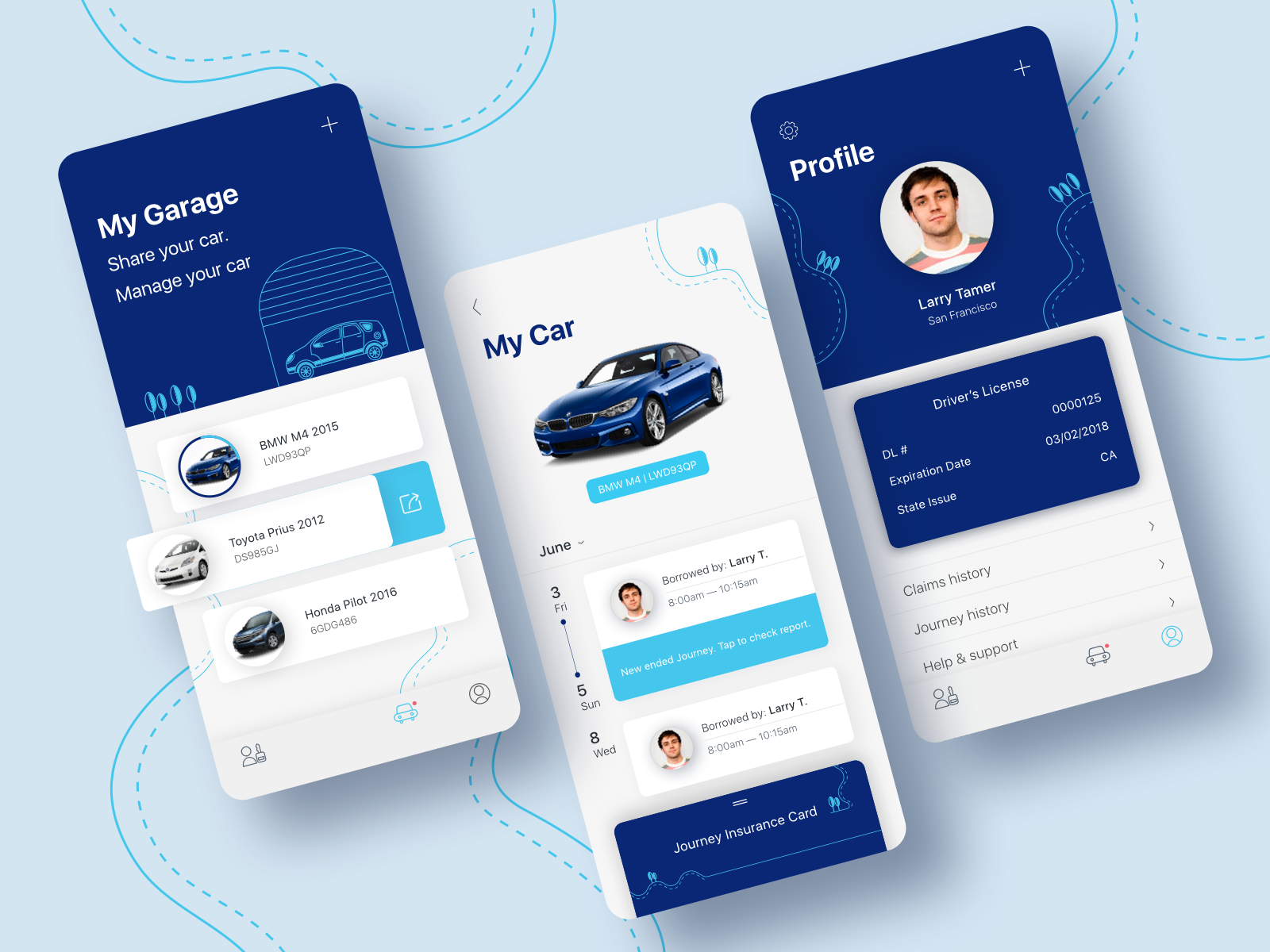
Lending a car shouldn't punish you for it.
Talk to anyone who lets a friend, parent, or caregiver drive their car and you'll hear the same small dread: "what happens if they ding it?" The mechanics underneath that dread are uglier than most owners realize.
When someone else drives your car and causes a claim, your premium goes up. Not theirs — yours. The insurance industry built its model around the vehicle, not the person at the wheel.
The founders had lived this personally — a family member crashed a borrowed car, the owner's rate jumped, the friendship strained. They wanted to design a product where lending didn't have a tax.
Make insurance follow the driver.
The whole product hinges on a one-sentence reframe — and everything downstream (pricing, UI, the two-sided flow, even the brand) comes out of it.
When a friend borrows your car and gets into a fender bender, your premium goes up. Quietly. You did nothing.
The borrower buys hourly coverage based on their own driving history. Your premium stays where it was. Your car stays yours.
One concept, two distinct flows.
Owner and Borrower aren't variants of the same screen — they need different mental models, different controls, different first impressions. I designed each as a self-contained experience that handed off cleanly at the moment of borrowing.
- Add cars to MyGarage with photos + plates
- Pick who can borrow, with one tap
- See where the car is in real time while it's out
- Keep their own premium private — borrowers never see it
- Browse available cars in friends' garages
- Buy hourly insurance — priced from their own driving record
- See the live Journey Insurance Card during the trip
- Return the car; coverage ends; nothing carries over to the owner
A few of the interactions I cared about most.
Most of the work was the connective tissue, but a handful of moments carried the product's promise. These are the ones I'd show on a wall.
Owners think about their cars by name and memory, not by VIN. MyGarage shows each vehicle as a portrait card you flip through, with the heavy insurance data tucked behind it.
The borrower's coverage shows up as a digital card that's only active during the trip — visible to police, useful in a claim, gone when the car is returned.
Same app, two homepages. Owners land on their garage and a "who has my car right now" status; borrowers land on available cars in their network with the buy-coverage CTA.
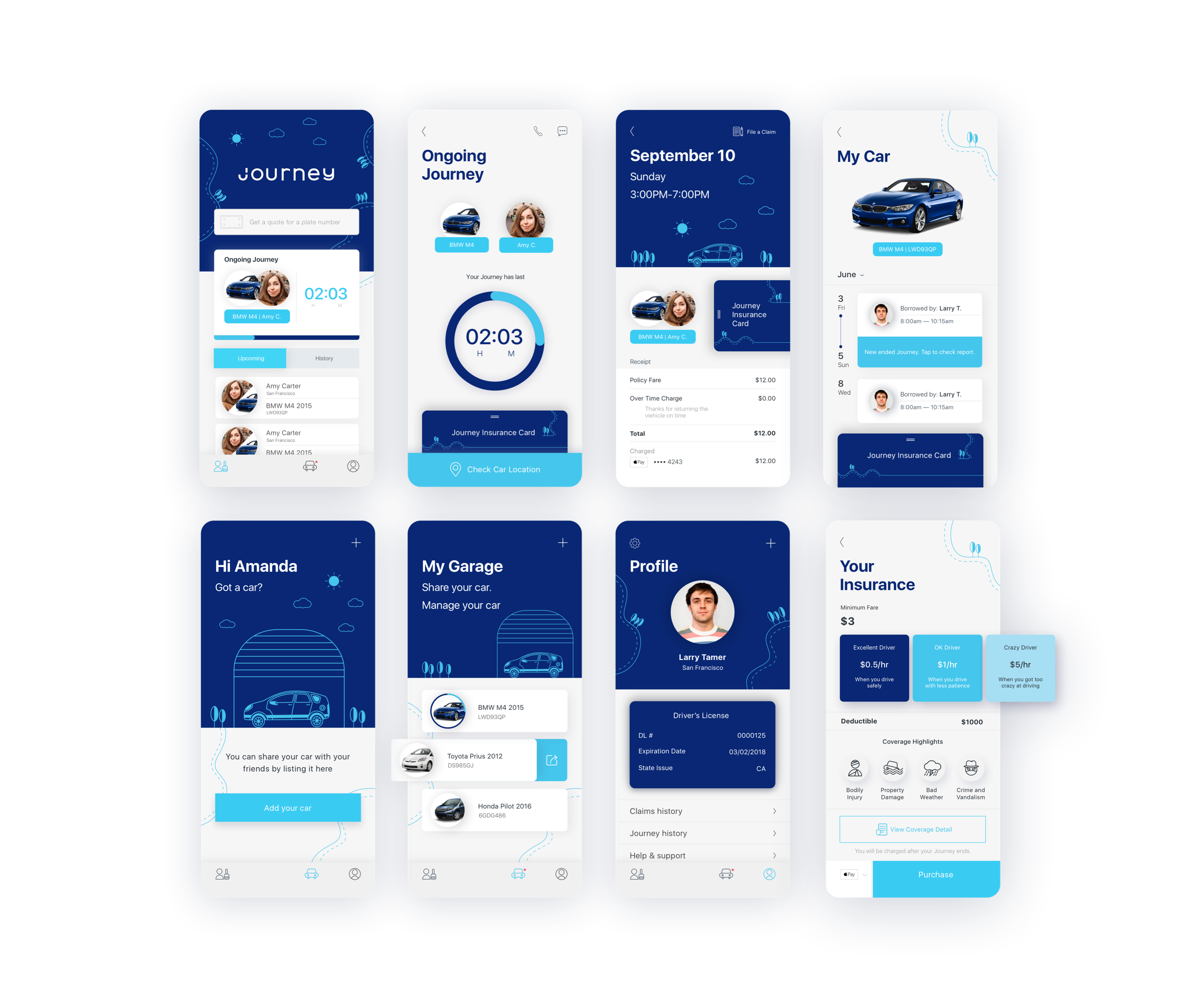
A small system: rounded cards, license-plate-style identifiers, a single electric blue for active states. Restraint here so the live insurance card could carry all the visual weight when it mattered.
Driver-based insurance was a clean idea then. Years later, I'm still proud of how this one read.