Sliced by product · 8 SKUs · no clear path
Ecosystem
Discovery
Redesigning QuickBooks.com navigation around customer intent and business goals.
+8K
Projected annualized units
+$10M
Projected annual revenue impact
100%
Rollout · live on QuickBooks.com
01 — Reframing the ecosystem
Customers don't think in products. They think in problems to solve.
Before
A customer ricochets through silos, hunting for the right product before they know what they need.
After
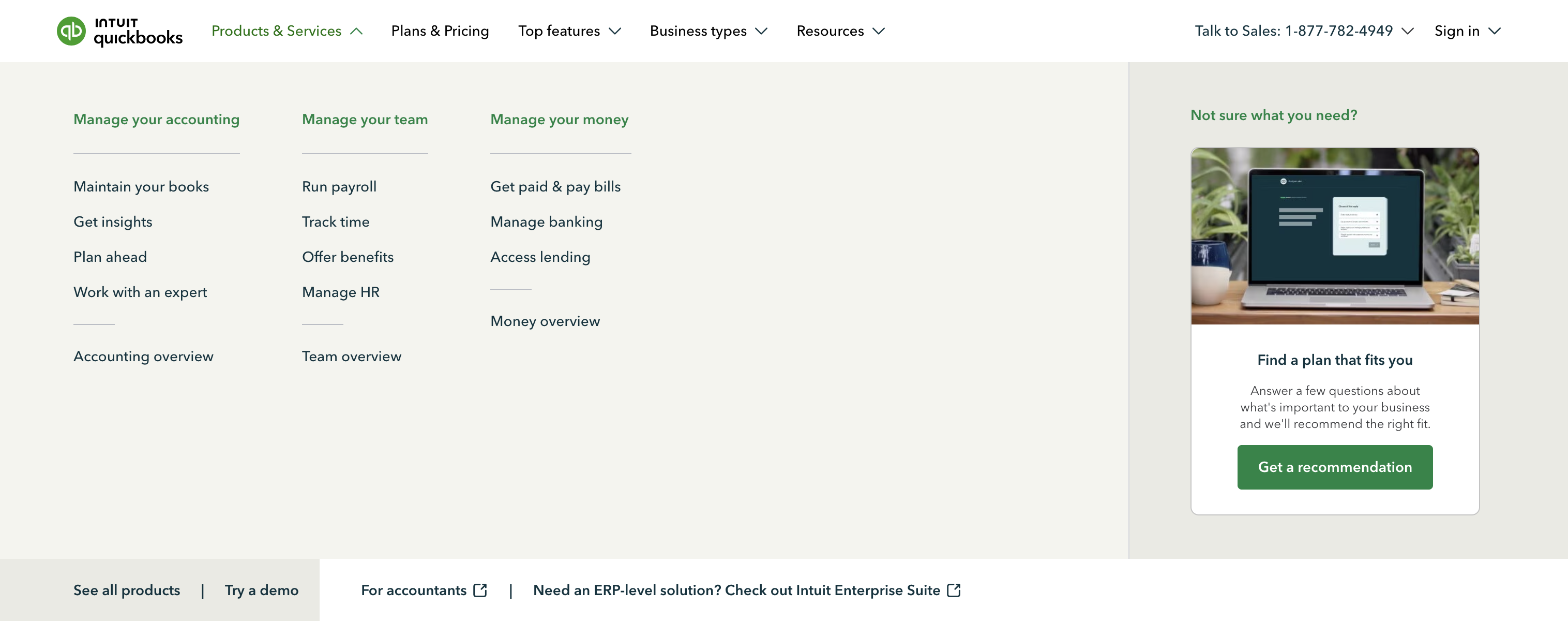
Attention follows intent — Main Menu, to the job (Manage money), to the task (Get paid).
Organized by job · 3 jobs · 1 intentional path
02 — Core insight
Customers searched for outcomes, while the ecosystem exposed internal product structures.
Customer mental models
- "I need to get paid"
- "I need bookkeeping help"
- "I run a restaurant"
- "I need payroll support"
Previous ecosystem structure
- Product-first navigation
- Fragmented features
- Disconnected product silos
- Internal terminology
03 — Strategic framework
Four pillars of the redesign
The navigation system rests on four research-grounded strategies, each reinforcing the others to make a complex ecosystem feel obvious.
01
Jobs-to-be-Done architecture
Reorganized the ecosystem around what customers are trying to accomplish — "manage your money," "manage your team," "do your accounting" — rather than internal product names.
02
Search behavior analysis
Studied how customers actually arrived and queried QuickBooks.com. Their language was outcome-oriented; the navigation was product-oriented. The gap was the problem.
03
Ecosystem relationship mapping
Mapped how QuickBooks Online, Payroll, Payments, Time, and partner products relate to each customer goal — so discovery doesn't silo by SKU.
04
Multi-path discovery systems
Built parallel pathways — by problem, by feature, by industry, by business size — so customers with different mental models all land on the right solution.
04 — Future state system
Different customers, different doors into the same ecosystem.
A freelancer arriving with "I need to get paid" and a CFO comparing enterprise plans both need to land on the right surface — without knowing the SKU names that live underneath. Five parallel entry paths make the system legible from any mental model.
BY PROBLEM
Customer jobs
Manage your money, your team, your accounting, your compliance.
BY FEATURE
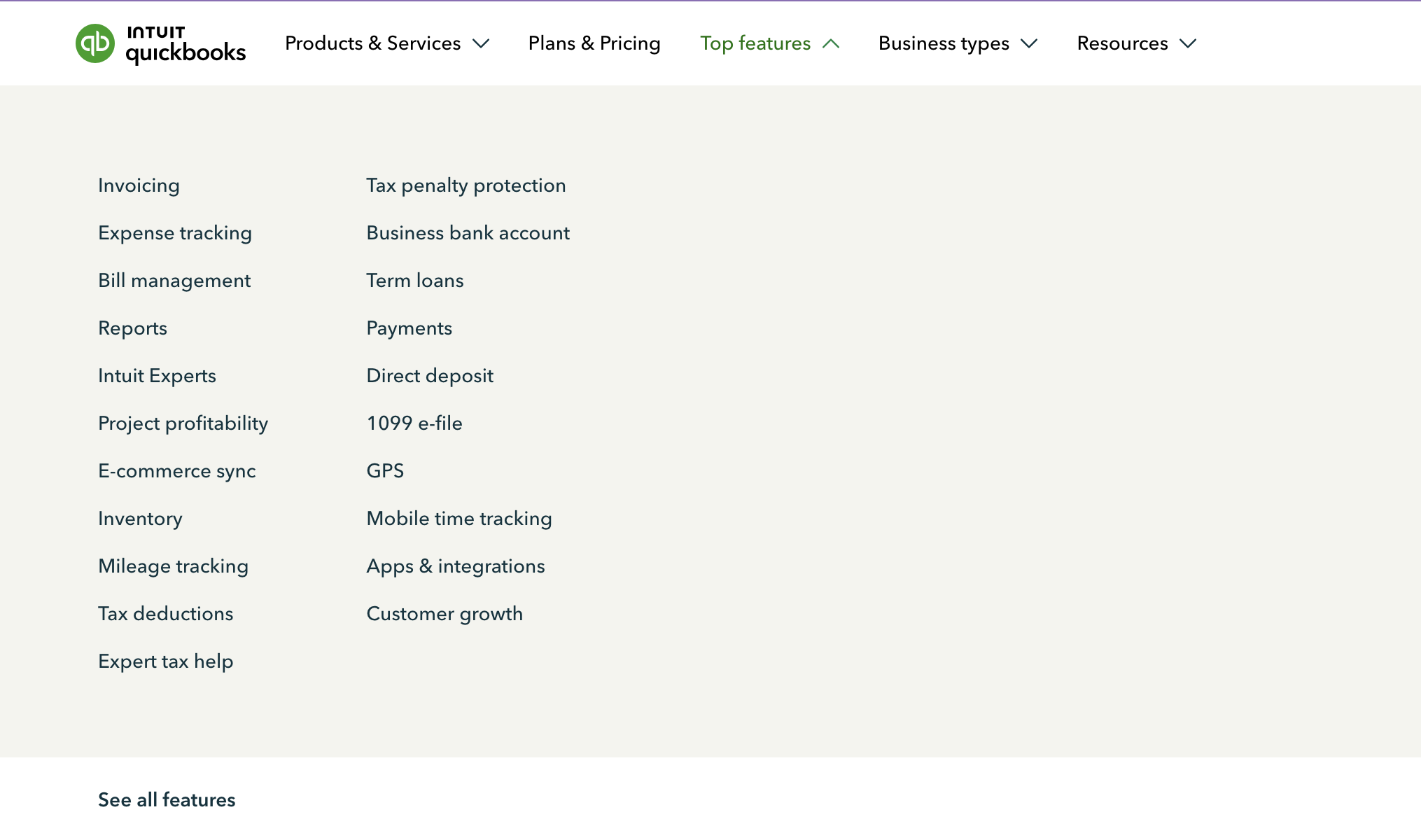
Top features
Send invoices, run payroll, track expenses, maximize deductions.
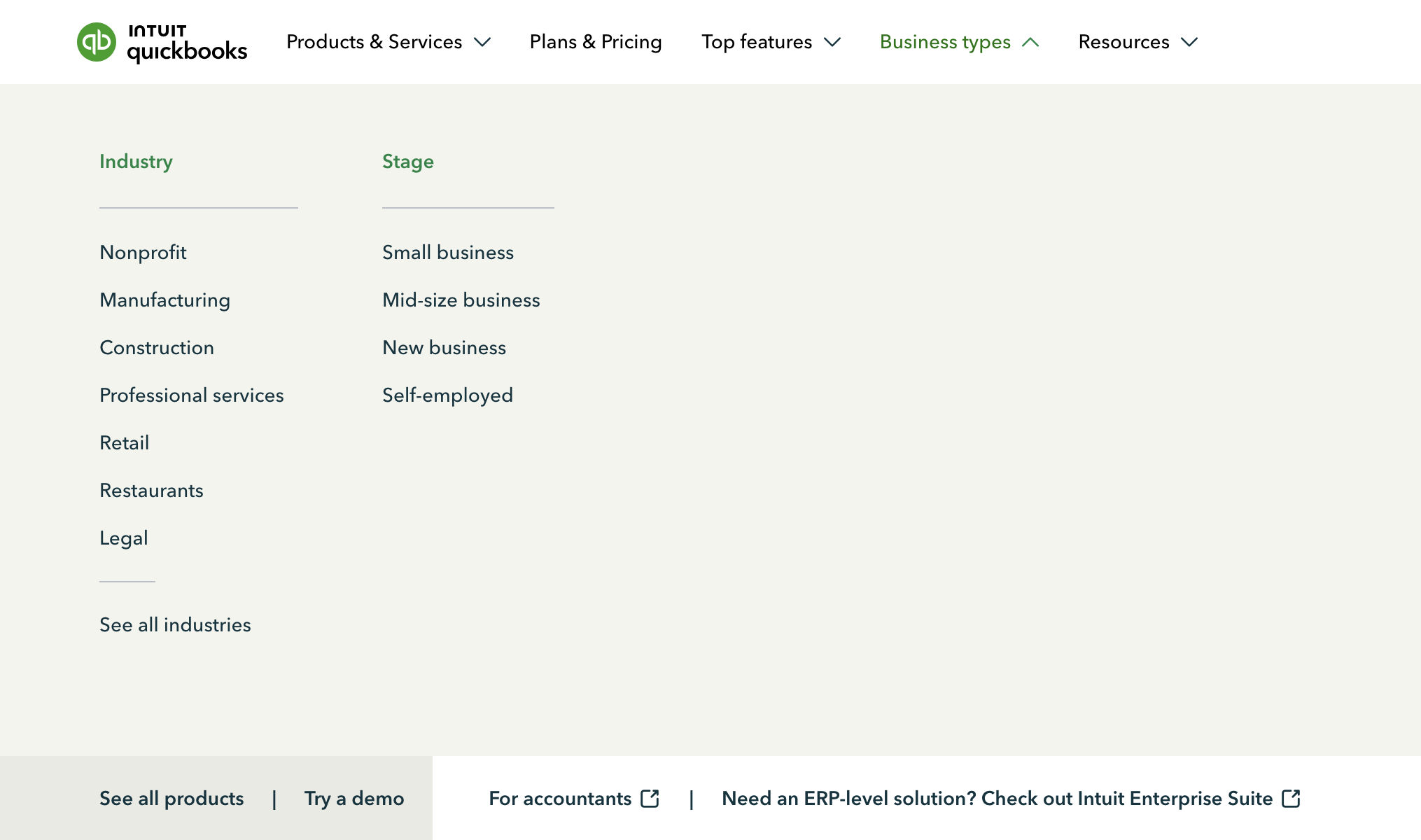
BY INDUSTRY
Trade & vertical
Retail, construction, restaurants, nonprofits, professional services.
BY SIZE
Business stage
Freelance, small, mid-size, enterprise, new business.
BY ECOSYSTEM
Across products
See the full QuickBooks ecosystem and how products connect.
05 — Shipped experience
Live on QuickBooks.com
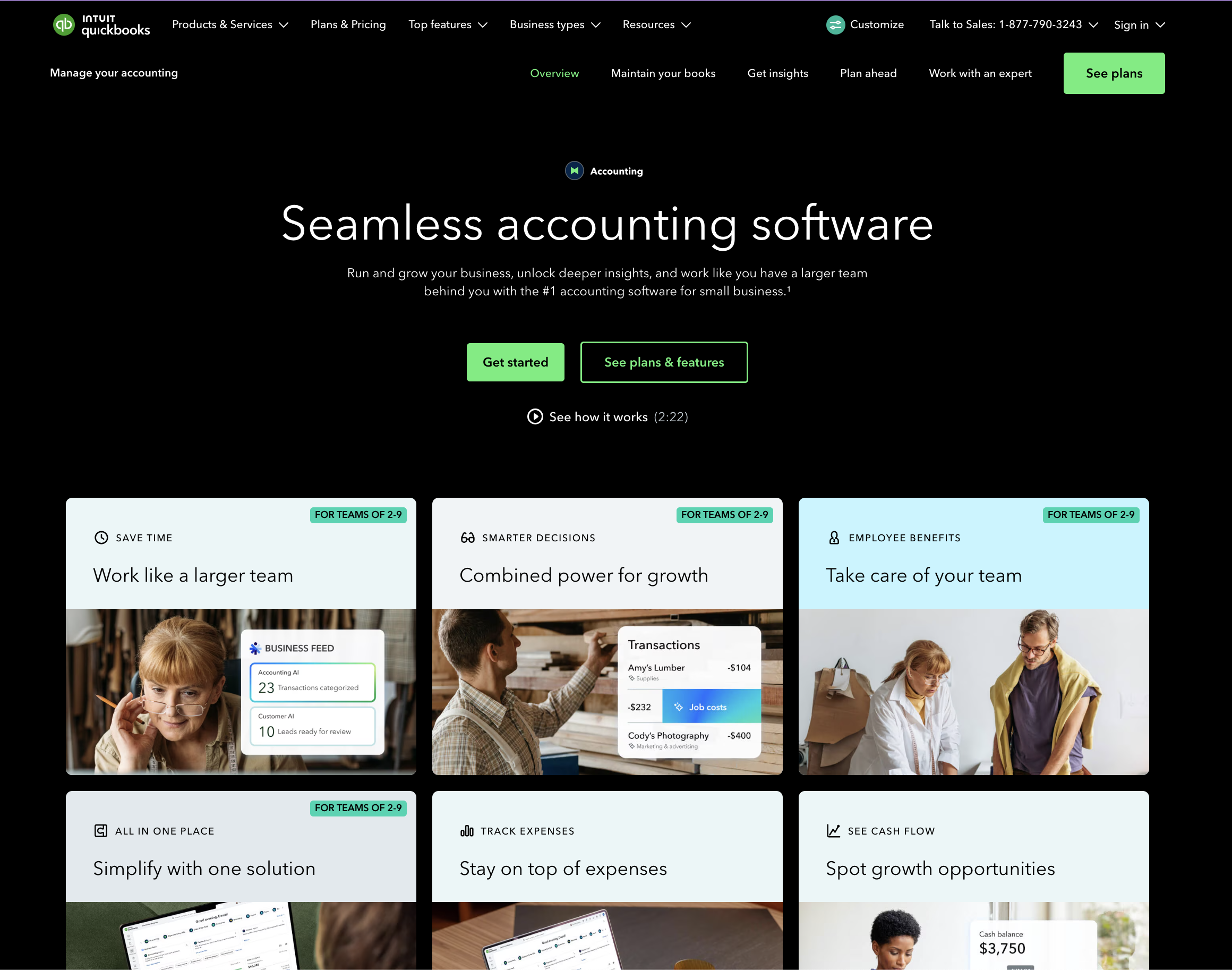
The redesigned mega-menus organized around customer jobs, with parallel paths for top features, business type, and ecosystem exploration. Currently serving 100% of QuickBooks.com traffic.
Reduced frictionEcosystem visibilityScalable IACustomer guidance pathways
06 — Iteration & business balancing
Customer guidance and business performance, in tension.
The earliest live versions of the redesign improved ecosystem discoverability — customers found the surfaces they needed faster and explored more deeply. But the shift also affected SKU mix behavior in unintended ways, surfacing entry-tier products at the expense of higher-value pathways.
Subsequent iterations balanced the two pressures: preserving the jobs-to-be-done structure that made the ecosystem legible, while re-merchandising priority surfaces so business outcomes moved with the customer experience rather than against it. The final architecture held both lines.
07 — Results
Shipped, measured, and rolled out at scale.
+8K
Projected annualized units
+$10M
Projected annual revenue impact
100%
Rollout · live on QuickBooks.com
The project demonstrated that navigation architecture can directly influence ecosystem discoverability, customer guidance, and measurable business performance at scale.
08 — Reflection
This project changed how I think about navigation design. I stopped viewing navigation as a sitemap problem and started thinking about it as a customer cognition problem — helping people move from uncertainty to the right solution pathway inside a complex ecosystem.